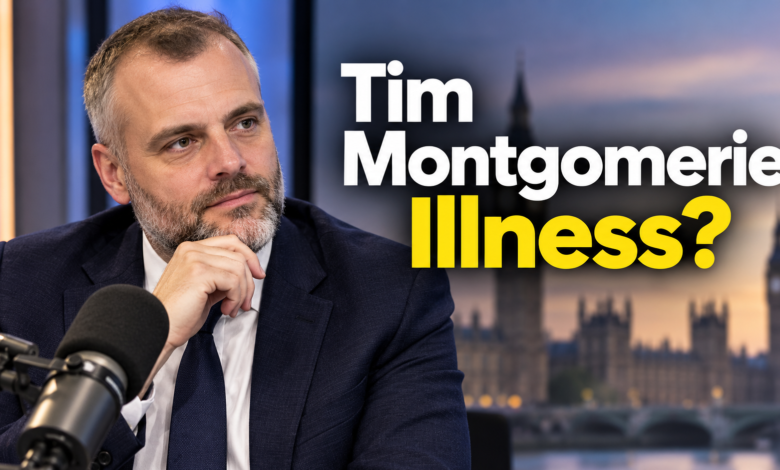
Tim Montgomerie is a British political commentator and writer whose career has kept him in the public eye for many years. Searches for “Tim Montgomerie illness” often lead to questions about his health, but it is important to separate what he has shared publicly from speculation.
| Quick bio | Details |
|---|---|
| Name | Tim Montgomerie |
| Profession | Political commentator, writer and campaigner |
| Known for | Founding ConservativeHome and co-founding the Centre for Social Justice |
| Early career | Worked at the Bank of England |
| Nationality | British |
Tim Montgomerie illness: what has he said?
The clearest public information about Montgomerie’s wellbeing concerns mental health struggles he has said he experienced in recent years, particularly during the COVID-19 lockdown period. His comments have prompted interest from readers who want to understand what he meant and whether he identified a specific condition.
It is important to describe those remarks carefully. Speaking about a difficult period or mental health struggles does not, by itself, establish a medical diagnosis. Unless someone publicly names a condition, it would be misleading to assign one to them.
Montgomerie’s public comments have been connected to an interview with Peter Whittle for the New Culture Forum. The discussion addressed the personal strain he experienced during lockdown. His remarks form the basis of what can responsibly be said about his health from public information.
They do not confirm a particular physical illness. Nor do they establish that he has a continuing medical condition. Readers looking for a definite diagnosis should know that no clear diagnosis has been publicly confirmed in the sources reviewed for this article.
Why are people searching for Tim Montgomerie illness?
Montgomerie is a familiar figure in British political discussion. He has appeared in interviews, written commentary and helped build organisations that shaped debate on the centre-right. When someone with a visible public profile speaks about a personal struggle, people naturally look for more context.
Searches can also grow when a question is repeated across websites and social media. Repetition may make an unverified claim seem established, even when many pages trace back to the same thin or unclear information. A search result is not the same as confirmation.
Some websites use medical terms in headlines without offering reliable evidence for them. Readers may then encounter a serious-sounding claim before they find the more limited facts. That can create an impression that a diagnosis has been confirmed when it has not.
A responsible account of Tim Montgomerie illness should therefore begin with his own publicly described experience and distinguish it from claims that lack reliable support. It should avoid turning a question, a photograph or an online discussion into a medical conclusion.
What is known about his mental health comments?
Montgomerie has publicly referred to mental health difficulties during the lockdown years. The available account links those difficulties to a challenging period, rather than providing a specific clinical diagnosis. That distinction matters because mental health is personal and cannot be accurately inferred from a brief remark.
Lockdowns disrupted ordinary routines and social contact for many people. Montgomerie’s comments give readers a glimpse of how that period affected him, but they do not offer a complete medical history. He is entitled to keep details private unless he chooses to share more.
It is also better not to add labels that he has not used. Terms such as depression, anxiety or another diagnosis should not be presented as fact unless he has clearly confirmed them or a reliable source has established them with his consent.
His comments can still matter to readers without being expanded into a diagnosis. Public figures discussing emotional difficulties may help make the subject easier to discuss. At the same time, respectful coverage should not press a person’s words beyond what they actually say.
Are claims about a physical illness confirmed?
No reliable public confirmation was found for claims that Montgomerie has a particular serious physical illness. Online discussion sometimes attaches diagnoses to public figures, but a repeated claim does not become evidence simply because it appears in multiple search results.
A person’s appearance, speaking style or movement in a photograph or video cannot establish a medical condition. Such observations are incomplete, and many different factors can affect how someone appears at a particular moment. Diagnosis requires appropriate medical assessment, not audience guesswork.
For that reason, claims about a neurological condition, a stroke or another specific illness should be treated as unverified unless backed by a clear statement from Montgomerie or reliable reporting. This article does not present those claims as facts.
The careful answer to “What illness does Tim Montgomerie have?” is that no specific physical diagnosis has been confirmed in the public information reviewed here. He has spoken about mental health difficulties during lockdown, but that should not be turned into a broader medical claim.
Tim Montgomerie’s career in public life
Montgomerie’s career helps explain why readers are curious about him. He began his professional life at the Bank of England before moving into political work and commentary. Over time, he became known for his involvement in several prominent political projects.
He launched ConservativeHome in 2005. The site focused on Conservative politics and grassroots party members, and it became a widely followed platform for discussion. Montgomerie’s role as its founder and editor brought him regular attention within Westminster and beyond.
He also co-founded the Centre for Social Justice with Iain Duncan Smith. The organisation focused on social policy and poverty, subjects that became a visible part of Montgomerie’s public work. His interests have extended across political campaigning, journalism and broadcasting.
Over the years, he has worked as a commentator and taken part in discussions about British politics and policy. His views and affiliations have evolved, as they do for many public figures. That public activity is well documented, while his private medical information remains limited.
How to read online reports about Tim Montgomerie illness
When evaluating an online article about Tim Montgomerie illness, check whether it identifies a clear, reliable source. Does it point to his own words, an interview or reputable reporting? If it offers a diagnosis without explaining where that information came from, treat the claim cautiously.
Look for a difference between “he said he struggled during lockdown” and “he has a named disorder.” Those statements carry very different meanings. The first describes a public comment; the second makes a medical claim that needs stronger evidence.
Be wary of articles that use dramatic language but provide no direct evidence. Some pages repeat each other’s wording or leave readers with more questions than answers. A confident headline cannot replace a trustworthy source.
Readers can also consider whether an article respects privacy. A person’s health is sensitive, even when that person is well known. Public interest in a political figure does not make every private detail public, and curiosity should not be used to justify speculation.
What fans and readers should take away
For fans and readers, the most useful takeaway is simple: Montgomerie has publicly referred to mental health struggles during the lockdown period, but no specific physical illness has been confirmed in the public material reviewed for this article.
That answer may feel less dramatic than some online headlines, but it reflects the limits of what is known. If Montgomerie chooses to share further details in the future, those comments can be considered on their own terms. Until then, speculation should remain clearly separate from fact.
His professional life is easier to describe than his private health. He is known for his political commentary, for founding ConservativeHome and for helping establish the Centre for Social Justice. Those contributions offer a fuller view of his public work than unsupported health claims do.
The phrase “Tim Montgomerie illness” may bring people to search results, but it should not be treated as proof that a diagnosis exists. A careful account can acknowledge what he has said, respect what he has kept private and avoid presenting online rumours as established information.